
-
 NSW fall armyworm roadshow and hands on...From : Wed, 25 Nov 2026 12:00 PMTo : Wed, 25 Nov 2026 04:00 PMAt : Richmond

Fall armyworm research, development and extension for horticulture
Latest news and updates
-

Bundaberg fall armyworm roadshow: Improving practical management
The VG22006 National fall armyworm (FAW) project Bundaberg roadshow was delivered at AgroTrend 2026 on 11 September, with a Queensland Government DPI booth operating across 11 and 12 September. The VG22006 project, VegNET Bundaberg, Bundaberg Fruit and Vegetable Growers, and the DPI Bundaberg team partnered to deliver the event.
Dr Ramesh Puri facilitated the FAW roadshow, with Dr Melina Miles and Dr John Stanley delivering the technical and hands-on sessions. Topics included FAW identification, pheromone traps and monitoring, differentiation from Helicoverpa and other caterpillars, crop-damage assessment, regional growth-rate information, treatment performance, natural enemies, and integrated pest management.
A panel comprising grower Russ McCrystal, agronomist Marija Tromp, Dr Miles and Dr Stanley discussed practical farming experiences, agronomic observations and relevant research findings. The Queensland Government DPI booth also presented FAW activities alongside Reef, citrus and sweet potato programs.
Key takeaways from the FAW roadshow
- Use pheromone traps as an early warning tool, not as a stand-alone decision tool. Increasing male moth catches may indicate a period when more intensive crop scouting is warranted, but management decisions still require field assessment of eggs, larvae and crop damage.
- Early and regular crop monitoring remains central to FAW management. Finding egg masses and small larvae early gives growers and advisers better information to consider management options and spray timing.
- Accurate identification matters. Participants strengthened their ability to distinguish FAW from Helicoverpa and other caterpillars, reducing the risk of management decisions based on misidentification.
- Timing is important when intervention is required. Monitoring larval size, crop stage and infestation levels can help support more timely treatment decisions, particularly before larvae become larger or move into protected parts of the plant.
- Assess treatment performance after application. Follow-up monitoring is important to determine whether a treatment has worked and whether further action is justified, rather than relying only on the fact that a spray has been applied.
- Beneficial insects and natural enemies are part of the management system. Recognising parasitoids, predators and other beneficial organisms can help growers consider their contribution when developing an integrated pest management approach.
- Grower, agronomist and researcher perspectives complement each other. The panel highlighted the value of combining practical farm experience, local agronomic observations and research findings when adapting FAW management to regional production systems.
- Integrated management remains important. No single monitoring or control tactic provides all the information needed. Combining identification, crop scouting, pheromone trapping, treatment assessment, beneficial organisms and appropriate insecticide use provides a stronger basis for FAW management.
Queensland DPI delivered this event in collaboration with Bundaberg Fruit and Vegetable Growers and the VegNET RDO under the VG22006 National fall armyworm innovation system for the Australian vegetable industry project, funded by Hort Innovation using the vegetable research and development levy and contributions from the Australian Government.

FAW moth catches from pheromone traps
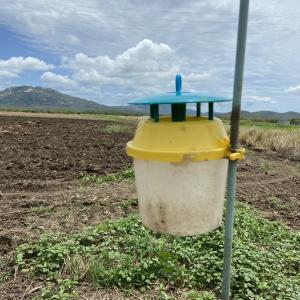
Bowen (North Queensland) FAW moth catches

Gatton (South East Queensland) FAW moth catches
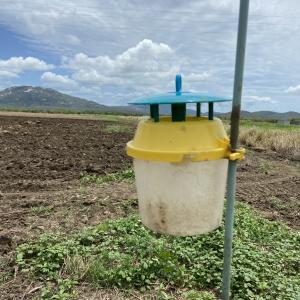
Tenthill (South East Queensland) FAW moth catches
Updated: 22 September 2026
A pheromone trap baited with Pherolure was deployed at Tenthill in February 2025 during the sweet corn growing season.
Weekly moths catch: 27 / week