
-
 NSW fall armyworm roadshow and hands on...From : Wed, 25 Nov 2026 12:00 PMTo : Wed, 25 Nov 2026 04:00 PMAt : Richmond

Fall armyworm research, development and extension for horticulture
Latest news and updates
-

Fall armyworm industry meeting in Lockyer Valley
On February 24, 2026, the VG22006 project team coordinated a fall armyworm industry meeting at the Gatton research facility, bringing together 30 local sweet corn growers, agronomists, seed companies, and researchers. The agenda for the meeting included topics previously identified by industry participants in Lockyer Valley meetings.
Cameron Stone from AgNova talked about Provivi Pherogen, a mating disruption method for FAW, Melina Miles (Queensland DPI) covered the use of pheromone traps and egg monitoring techniques. John Stanley (Queensland DPI) gave updates on FAW trials from Bowen and Burdekin, covering Nucleopolyhedrovirus (NPV) participatory action research (PAR) trials, Metarhizium research, and monitoring for insecticide resistance. Praise Tadle and John Duff from Queensland DPI in Gatton discussed the sweet corn varietal trial, which included a field walk following their presentation.
Key messages from the presentations were:
- Pherogen, pheromone trapping, Metarhizium, NPV, and varietal trials all provided useful insights, but most require further validation under Australian farming conditions.
- Biological options remain important for integrated pest management; Metarhizium appears promising, while NPV showed limited value in the Bowen PAR trial.
- Insecticide resistance monitoring remains a priority, with no resistance currently detected in Groups 5, 6, 22 and 28, but growers and agronomists still see resistance risk as a major concern.
The meeting also identified opportunities for future RD&E
- Conduct further Australian-based trials on Pherogen, pheromone trapping and biopesticides, including Spodovir, under different pest pressure and cropping conditions.
- Continue insecticide resistance monitoring and consult industry on practical response plans if resistance is detected.
- Expand varietal trials next season, including sweet corn and other grass crops such as maize and sorghum, to identify less-preferred or more tolerant varieties.
- Improve grower and adviser capacity through focused education, spray guides, decision tools and workshops on resistance management, biological options and practical IPM strategies.
Image: Participants attending the field walk on sweet corn varietal trials at the Gatton research facility, and industry participants talking with John Duff, QDPI’s principal plant protectionist, about the varietal performance.
The meeting was delivered as part of the Hort Innovation funded project VG22006 'National Fall Armyworm (FAW) innovation system for the Australian vegetable industry'.

FAW moth catches from pheromone traps
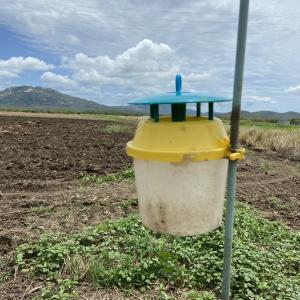
Bowen (North Queensland) FAW moth catches

Gatton (South East Queensland) FAW moth catches
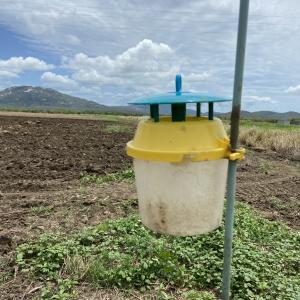
Tenthill (South East Queensland) FAW moth catches
Updated: 22 September 2026
A pheromone trap baited with Pherolure was deployed at Tenthill in February 2025 during the sweet corn growing season.
Weekly moths catch: 27 / week