
Fall armyworm research, development and extension for horticulture
Latest news and updates
-

Fall armyworm’s secret life on capsicum
Research led by Dr Trevor Volp, DPI Queensland, has investigated how Fall Armyworm and two other key caterpillar pests – namely cluster caterpillar (Spodoptera litura) and Helicoverpa armigera – infest capsicum during reproductive crop stages. The research explains what growers have observed with FAW in capsicum crops. Understanding these infestation patterns will help guide monitoring efforts and inform management decisions.
Key findings were:
- Fall armyworm is unlikely to warrant treatment in capsicum during vegetative growth stages
- The risk of fall armyworm entering fruit is greatest during the early and mid-fruiting stages, where caterpillars preferentially move to the fruit. Infestations in capsicum fruits likely arise from early instar larvae, as first instars can penetrate the fruit wall to feed inside the fruit.
- Monitoring for fall armyworm during fruiting is essential, and searches should be focused on looking for larvae/feeding damage underneath the fruit calyx or at the apex of the fruit.
Read the full article here
Find more on Identifying and managing key caterpillar pests in capsicum
Image: A secretive fall armyworm larva (circled) feeding beneath the capsicum calyx, illustrating a typical early instar feeding site. The inset shows a magnified view of the larva.
FAW moth catches from pheromone traps
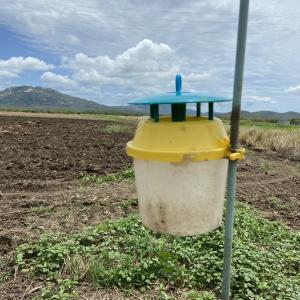
Bowen (North Queensland) FAW moth catches

Gatton (South East Queensland) FAW moth catches
Updated: 16 June 2026
Various peak values have been recorded, most of which occur during the warm-weather season. Since the initiation of the trapping program, the highest number of male moths collected on traps was between January and February 2024.
Weekly moths catch: 0 / week
Tenthill (South East Queensland) FAW moth catches
Updated: 5 May 2026
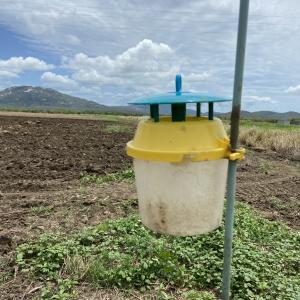
A pheromone trap baited with Pherolure was deployed at Tenthill, Lockyer Valley, in February 2025 during the sweet corn growing season.
Weekly moths catch: 118 / week