
-
 NSW fall armyworm roadshow and hands on...From : Wed, 25 Nov 2026 12:00 PMTo : Wed, 25 Nov 2026 04:00 PMAt : Richmond

Fall armyworm research, development and extension for horticulture
Latest news and updates
-

Lockyer Valley industry gets updated on fall armyworm trials and ongoing research
A total of 24 growers, agronomists, and researchers from Lockyer Valley and Fassifern Valley gathered at the Gatton Research Facility in mid-September to discuss previous trial results and ongoing research on fall armyworm.
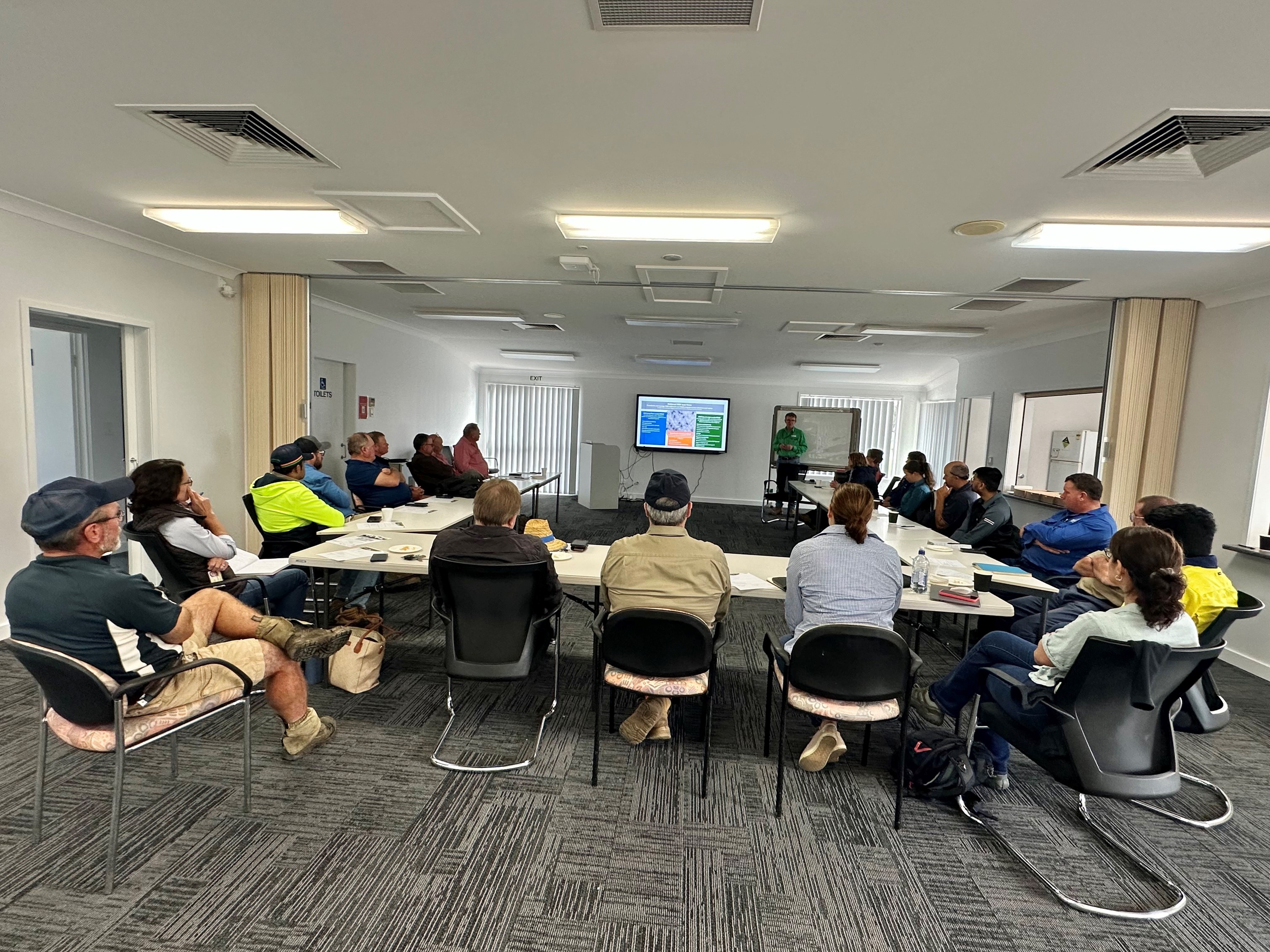
Dr. Melina Miles, an entomologist from QDPI presented results from trials conducted as part of the VG23006 investment (Hort Innovation & QDPI), which included the following:
Residual impact of insecticides on Trichogramma adults – some insecticides tested were still killing 100% of adult wasps (with 4 hours of exposure to treated leaves) up to 21 days after spraying. All the products tested can be grouped into three categories:
- low impact at all days after treatment – methoxyfenozide (Prodigy), the adjuvant Wetcit
- high initial impact, declining over time – chlorantraniliprole (Vantacor), indoxacarb (Avatar), tetraniliprole (Vayego)
- high impact from 0 to 21 days after spraying – spinetoram (SuccessNeo), spinosad (Entrust), emamectin benzoate (Proclaim), spinetoram + methoxyfenozide (IntrepidEdge), methomyl (Lannate).
Trichogramma and other parasitoid wasps, such as Chelonus and Cotesia, play an important role in suppressing FAW populations and damage by targeting FAW eggs and small larvae.
Push Pull trial – the data from last season’s trial shows that the different configurations of sweet corn crop (pull crop) and Sunn hemp (the push crop) did not influence egg laying by FAW moths. Some natural enemy species e.g. ladybirds and the predatory mirid Tytthus were more abundant in the sweet corn closest to sunn hemp blocks.
Repeat application of Fawligen – the outcome of the Fawligen trial (8 consecutive applications of 200 mL/ha + Optimol at 4 day intervals) was low levels of virus infection and ongoing recruitment of larvae in the treated crop.
Comparing manual and automated RapidAim traps – data collected by John Stanley (QDPI, Bowen) was presented, showing little difference in the size and pattern of moth numbers in the bucket traps and RapidAim traps. This should give industry confidence to use either option, knowing that the data collected will be consistent. There was a weak relationship between the number of moths captured by the trap and the egg count in the field. The participants seemed to agree with the findings, noting significant variability among traps. Some said that pheromone trapping is still valuable and expressed a desire for pheromone traps that could help in managing the moth population in the field. In late 2025, a trial at Gatton will look at whether multiple pheromone traps around a field provides a better relationship between moth numbers in the traps and eggs in the field.
Dr. Vivian Mendez, a researcher at Macquarie University, provided an update on their ongoing study regarding the regional differences in sex pheromones of fall armyworm and the effectiveness of four commercial sex pheromone lures in Australia. The differences between northern and southern field sites in the attraction of fall armyworm and false armyworm to the commercial lures reflect regional patterns of seasonal abundance, with northern areas having year-round populations of both species and southern areas established seasonally by migration. The pheromone blends of wild fall armyworm populations in northern Australia differ from those in the south, supporting the hypothesis that established permanent populations differ from migratory populations. The team have developed region-specific pheromone blends for use in commercial lures throughout Australia. These blends are currently being tested in the field.
John Duff, plant protectionist from QDPI, provided an update on the status of fall armyworm insecticide resistance. He mentioned that current data shows no resistance to chlorantraniliprole, emamectin benzoate, spinetoram and indoxacarb has been detected thus far. He also talked about the variation to the fall armyworm extension project that has recently been approved to conduct increased regional monitoring to detect any emerging resistance. Participants were pleased to learn about the new project variation as they understand how insecticide resistance can develop in FAW and are concerned about the potential emergence of insecticide resistance in FAW in the coming years.
Overall, the meeting was a success, with both attendees and speakers demonstrating high levels of participation and interaction. The majority of the participants (88%) thought that the meeting was beneficial and offered insights from various topics, with 65-75% agreeing that the topics presented were relevant to their farming or advisory context. In addition, they also expressed interest in inviting overseas speakers to share and learn from their FAW experiences in their respective countries. The participants have identified the following as areas of concern, knowledge gaps, or motivation for FAW management:
- Assess new plant genetics for FAW resistance and address the challenges in obtaining new sweet corn varieties in Australia
- Study physiology/characteristics of the plant to identify plant traits that enhance resistance to FAW, such as tight cob
- Insecticide resistance management – is there a possibility to explore windows-based approach?
- More work is needed for products that target and kill moths
- Work to understand specific volatiles present on different crops that attract FAW
- Biopesticide for moths, e.g. virus on male moths that can infect female moths
The meeting was delivered as part of VG22006: National Fall Armyworm Innovation System for the Australian Vegetable Industry, funded by Hort Innovation using the vegetable levy funds and co-investment from the Department of Primary Industries, Queensland, and Agriculture Victoria.

FAW moth catches from pheromone traps
Bowen (North Queensland) FAW moth catches

Gatton (South East Queensland) FAW moth catches
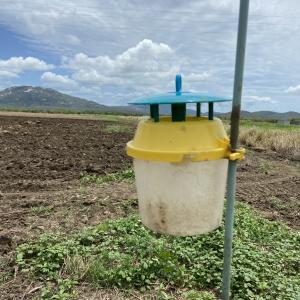
Tenthill (South East Queensland) FAW moth catches
Updated: 22 September 2026
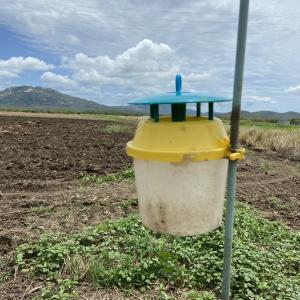
A pheromone trap baited with Pherolure was deployed at Tenthill in February 2025 during the sweet corn growing season.
Weekly moths catch: 27 / week