
Fall armyworm research, development and extension for horticulture
Latest news and updates
-

Regional variation in the efficacy of fall armyworm pheromone-based lures in Australia
Macquarie University researchers led by Dr Vivian Mendez have achieved a significant milestone under the Hort Innovation project AS21000 “Effective fall armyworm pheromone blends for improved monitoring and population estimation in Australia”. Recently published in the Australian Grower (Summer 2025/26), researchers report that the performance of four commercially available lures (Chemtica, Pherolure, Tréce and Iscalure), used to monitor fall armyworm in Australia, differed. Lures attracted similar numbers of fall armyworm across sites in Queensland, with this pattern being consistent for a wide diversity of crop types, but there was considerable variation across sites in the Northern Territory, Western Australia and New South Wales. The capture of non-target species, particularly false armyworm, also varied. In Queensland and Northern Territory, Chemtica and Iscalure attracted much larger numbers of false armyworm than Pherolure and Tréce, while in New South Wales and Western Australia, the results were much more mixed, with Pherolure and Tréce capturing larger numbers of false armyworm. There was substantial variation in the sex pheromone blend of moths collected from the different sites, with blends from northern field sites differing from those in the south. Based on these results, region-specific pheromone blends have been developed and incorporated in lures and are being tested in the field.
Read the full article here
More information: Dr Vivian Mendez, Macquarie University
FAW moth catches from pheromone traps
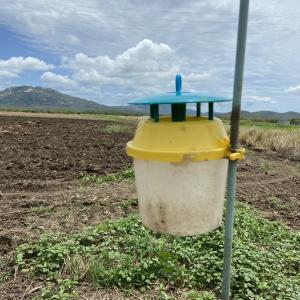
Bowen (North Queensland) FAW moth catches
Updated: 26 May 2026
The average pheromone trap catches recorded 59.5 moths (count per trap in a week).
FAW counts from pheromone traps set up at the Bowen Research Facility have increased with the crop season.

Gatton (South East Queensland) FAW moth catches
Updated: 5 May 2026
Various peak values have been recorded, most of which occur during the warm-weather season. Since the initiation of the trapping program, the highest number of male moths collected on traps was between January and February 2024.
Weekly moths catch: 3 / week
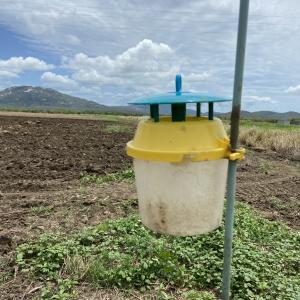
Tenthill (South East Queensland) FAW moth catches
Updated: 5 May 2026
A pheromone trap baited with Pherolure was deployed at Tenthill, Lockyer Valley, in February 2025 during the sweet corn growing season.
Weekly moths catch: 118 / week