

-
 NSW fall armyworm roadshow and hands on...From : Wed, 25 Nov 2026 12:00 PMTo : Wed, 25 Nov 2026 04:00 PMAt : Richmond

Fall armyworm research, development and extension for horticulture
Latest news and updates
-

Bowen–Burdekin FAW meeting focuses on practical management
The Bowen–Burdekin fall armyworm (FAW) industry meeting brought together growers, agronomists, researchers, and extension staff to share field observations and discuss practical FAW management priorities. Key outcomes included regular crop checking alongside pheromone traps, protecting currently effective insecticides through good resistance management, exploring biological control options, and focusing research on practical questions growers face on farm. -

Bundaberg fall armyworm roadshow: Improving practical management
The VG22006 National fall armyworm project Bundaberg roadshow brought together 25 growers, agronomists, researchers and industry representatives for technical, hands-on and panel sessions. The project shared learnings on pheromone trapping, egg-laying and crop monitoring, alongside practical messages on pest identification, timely scouting, beneficial organisms and integrated pest management. -
Fall armyworm (FAW) Spodoptera frugiperda insecticide resistance surveillance
The testing results to date indicate no change in susceptibility to chlorantraniliprole, emamectin benzoate, spinetoram or indoxacarb in FAW populations from Queensland, Western Australia, Northern Territory and New South Wales. Insecticide resistance surveillance is a critical component of FAW management, enabling early detection of changes in susceptibility and informing strategies to minimise the risk of resistance-driven control failures. -

Strengthening facilitation skills across the fall armyworm project team
What makes an extension activity meaningful, engaging and effective? The workshop strengthened participants’ skills in extension planning, facilitation, engagement, listening, questioning and evaluation. Interactive tools demonstrated practical ways to support inclusive learning and practice change, reinforcing the importance of planning. Thirteen representatives from DPI, VegNET, Hort Innovation and Agriculture Victoria attended the two-day Brisbane workshop facilitated by Jeanette Long. -

Familiarity with fall armyworm eggs — Quick guide
A new familiarity with fall armyworm eggs — Quick guide fact sheet is available through the VG22006 national FAW project. The guide supports familiarising with FAW egg masses and egg developmental stages, as well as timely IPM decisions. It is designed for growers, advisers and industry stakeholders. -

Fall armyworm industry meeting in Lockyer Valley
Thirty growers and industry representatives attended the fall armyworm (FAW) industry meeting coordinated by the VG22006 project team at the Gatton Research Facility on 24 February 2026. The meeting addressed priority topics raised in previous industry discussions, including Provivi Pherogen mating disruption, pheromone trapping and egg monitoring, Bowen–Burdekin trial updates, NPV trials, Metarhizium research, insecticide resistance monitoring, and sweet corn varietal trial results. -

Western Australia fall armyworm roadshow: Strengthening area-wide management through collaboration
National fall armyworm (FAW) roadshow events were recently held in Carnarvon and Geraldton, Western Australia. These events shared insights from the ‘National FAW innovation system for the Australian vegetable industry’ (VG22006) project, to strengthen local pest management strategies. -

Evaluating the potential for vegetative-stage economic thresholds for fall armyworm (FAW) in sweet corn
For the widely grown sweet corn variety Garrison, no economic threshold could be established because plants experience significant yield and harvestability losses even with the shortest exposure to FAW during the vegetative stages. Infestations of one larva per plant for just one week during mid- to late-vegetative stages led to stunting, infertility, and poorly filled cobs. A longer infestation period of 3 weeks resulted in more severe impacts and almost total yield loss. -

Lockyer Valley industry gets updated on fall armyworm trials and ongoing research
A total of 24 growers, agronomists, and researchers from Lockyer Valley and Fassifern Valley gathered at the Gatton Research Facility in mid-September to discuss previous trial results and ongoing research on fall armyworm. Dr. Melina Miles, an entomologist from QDPI presented results from trials conducted as part of the VG23006 investment (Hort Innovation & QDPI), which included the following: -

Collaboration strengthens fall armyworm management in Bowen–Burdekin
The Bowen–Burdekin FAW industry meeting brought together 24 growers, agronomists, researchers, and service providers to exchange research updates and field observations on fall armyworm (FAW) management. Key discussions covered unusually high FAW pressure in the Burdekin, promising results from pupae-busting trials, and improvements in monitoring tools such as pheromone traps and RapidAIM sensors.
- 1
- 2

FAW moth catches from pheromone traps
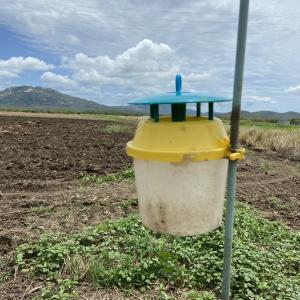
Bowen (North Queensland) FAW moth catches

Gatton (South East Queensland) FAW moth catches
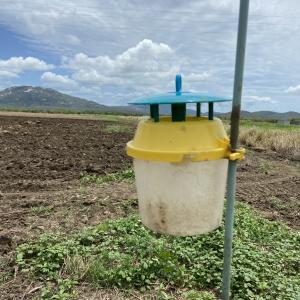
Tenthill (South East Queensland) FAW moth catches
Updated: 22 September 2026
A pheromone trap baited with Pherolure was deployed at Tenthill in February 2025 during the sweet corn growing season.
Weekly moths catch: 27 / week